Meet Springfield’s best-known resident and revered icon
Two centuries after his birth, Springfield’s best-known resident remains a revered icon, a leader who bore the weight of destiny to his untimely demise. Born in dire poverty and self-educated, Abraham Lincoln rose to lead our nation during its darkest time. His words inspired Americans during the Civil War, and they inspire us today.
Lincoln was born in Kentucky, grew up in Indiana and came into his own in Illinois. As a young man, he arrived in New Salem. A year later, he was elected captain of a militia company in the Black Hawk Indian wars. When the pioneer village helped elect Lincoln to the state legislature, he had to borrow money to purchase a suit. At the age of 28 he moved to Springfield without enough money to buy a bed. Through initiative, hard work and talent, he became an established and respected lawyer, was elected to the U.S. Congress, debated Stephen Douglas in an unsuccessful bid for the U.S. Senate, and in 1860 was elected the 16th president of the United States.
As Lincoln left for the nation’s capital in 1861 and the Civil War appeared imminent, he prophetically told a crowd assembled at the train station in Springfield: “I now leave, not knowing when, or whether ever, I may return, with a task before me greater than that which rested on Washington.”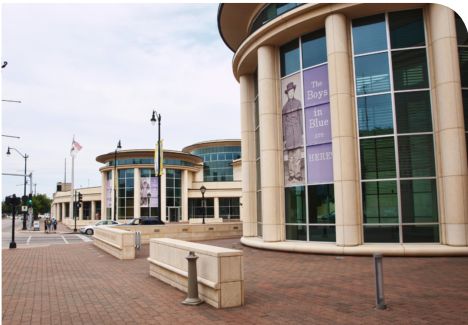
After Lincoln’s assassination, a grieving nation cast him as a mythic figure. Over the years Springfield has become a destination for many American pilgrimages. But in Lincoln’s hometown you’ll find not only the remnants of Honest Abe the rail-splitter, you’ll also discover a more complex, shrewd and wondrous man than the one likely encountered in your high school textbooks.
Abraham Lincoln Presidential Library and Museum complex
Presidential Museum Whether you’re a Lincoln researcher or just curious about the life of the Great Emancipator, you should begin your visit at the museum, on the northeast corner of Jefferson and Sixth streets. The Abraham Lincoln Presidential Library and Museum parking ramp is off Sixth Street between Madison and Mason streets.
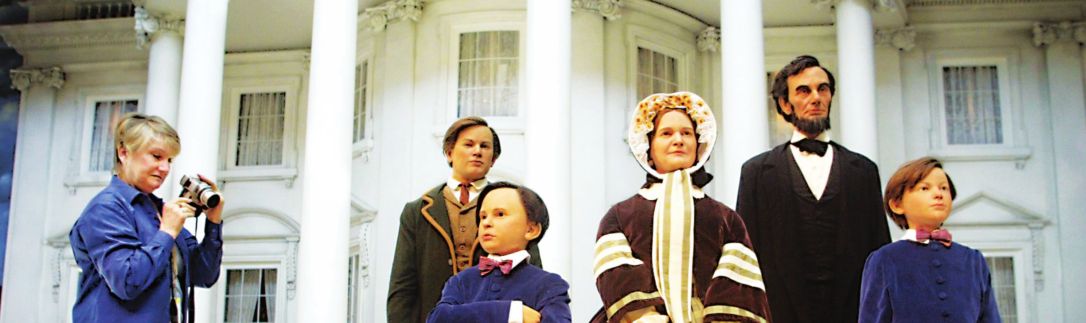
All museum exhibits are located on the ground floor, and all facilities are in compliance with the Americans with Disabilities Act. On the entryway floor, a compass points visitors to the plaza where the historical tour begins. Visitors see a replica of Lincoln’s boyhood home in Indiana and the front of the White House as it appeared in 1861. From that sunny atrium-like area, with its 70-foot ceiling, visitors may proceed to any of the display areas.
Many will be drawn naturally to the more rustic setting of the log cabin, where “The Journey” – the title of this odyssey through Lincoln’s life – begins. Children who are not as fascinated with Lincoln lore as their elders are may enjoy a visit to Mrs. Lincoln’s Attic, a supervised playroom where they may participate in a variety of hands-on activities, including dress-up, playing with giant Lincoln Logs and exploring a large dollhouse version of the Lincoln Home. “The Journey” begins with a visit to the circa-1820s replica of Lincoln’s boyhood cabin. Lincoln’s life story is depicted with the use of full-size replicas of a slave auction; life in New Salem; the future president’s interest in Ann Rutledge and his courtship of Mary Todd; Lincoln’s law office, with sons Willie and Tad playing on the furniture; the 1858 Senate debate at Galesburg and Lincoln’s farewell to Springfield. One highlight: a simulated television director’s studio where news stories and commercials for Lincoln’s 1860 presidential campaign are continuously played on video monitors as though the election were being held in modern times.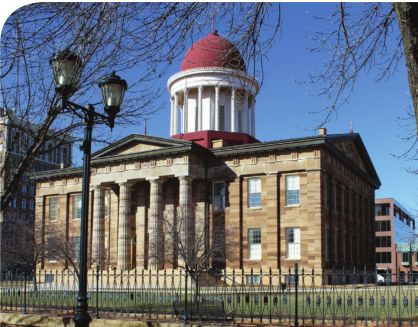
Part two of “The Journey” begins in a replica of the White House’s Blue Room, where Mary Lincoln appears to extend her arms in welcome. Most of this part of the tour is focused on the Civil War. In the Whispering Gallery, visitors hear the whispering voices of Lincoln’s detractors and see editorial cartoons depicting Abe in ways that make modern editorial images seem tame. In another room, a gravely ill Willie is shown with his parents at his side as a White House ball goes on downstairs. Also
included are replicas of the White House’s basement kitchen and the
Cabinet Room, where Lincoln discussed his forthcoming Emancipation
Proclamation with a divided cabinet. In one room visitors see the
president standing at his desk before signing the proclamation as a
barrage of words and projected images depict the world that surrounded
him when he put pen to paper. The journey ends with a reproduction of
Lincoln’s coffin as he was lying in state at what is now the Old State
Capitol historic site.
In the 250-seat Union Theater, a 17-minute layered-projection show, Lincoln’s Eyes, depicts
the president as each side of the divided nation saw him. The seats
tremble when cannons are “fired” into the audience and other special
effects add dimension to the story. Although the show presents the
entire picture, the message is intended to inspire viewers by revealing
the obstacles Lincoln overcame in his effort to serve his country. The
theater is also rented to organizations to use for various activities. A
climate-controlled Treasures Gallery displays priceless artifacts from
Lincoln’s life. These displays change throughout the year, so what you
see in April may be replaced with something else by September. The SBC
Ghosts of the Library theater presentation features a live actor and
holographic ghosts who touchingly answer the age-old question, “Why do
we study this old stuff?” “Ask Mr. Lincoln” is a touchand-learn display
that allows visitors to make selections from a variety of questions
about the man and his family. Answers from a historian or President
Lincoln himself are spoken as related images appear on screen.
 The
Illinois Gallery hosts a changing variety of presentations about
Illinois history and art. Beginning March 24 and continuing through
2017, it will offer “Cubs vs. Cardinals: The Rivalry,” a
once-ina-lifetime look at one of the greatest rivalries in sports. For
150 years, Illinois has been divided between the red and the blue, the
bird and the bear. This exhibit – presented with assistance from both
teams and the National Baseball Hall of Fame – traces the competition
through artifacts like Stan Musial’s glove, Rogers Hornsby’s jersey and a
base stolen by Lou Brock.
The
Illinois Gallery hosts a changing variety of presentations about
Illinois history and art. Beginning March 24 and continuing through
2017, it will offer “Cubs vs. Cardinals: The Rivalry,” a
once-ina-lifetime look at one of the greatest rivalries in sports. For
150 years, Illinois has been divided between the red and the blue, the
bird and the bear. This exhibit – presented with assistance from both
teams and the National Baseball Hall of Fame – traces the competition
through artifacts like Stan Musial’s glove, Rogers Hornsby’s jersey and a
base stolen by Lou Brock.
The presidential museum also features an exhibit of sets, costumes and props from the Oscar-winning movie Lincoln, starring
Daniel Day-Lewis as the 16th president. The exhibit, “Lincoln: History
to Hollywood,” is housed in the Union Station annex, across Sixth Street
from the main museum building.
Abraham
Lincoln Presidential Library and Museum, 212 N. Sixth St.,
217-558-8844, www. presidentlincoln.illinois.gov. Museum hours: 9 a.m.-5
p.m. daily (ticket sales end at 4 p.m.). Museum admission is $15 for
visitors ages 16-61; $12 for seniors 62 and older; $10 for active duty
military personnel; $12 for students with a school or college ID; $6 for
children 5-15; free for children under age 5. Admission is discounted
for prearranged group and school tours.
 Presidential Library The
Lincoln Presidential Library (formerly the Illinois State Historical
Library) is just across Jefferson Street from the museum and is home to
nearly 13 million items pertaining to Illinois history. Genealogists,
scholars and students make use of the library’s county histories,
photographs, manuscripts and newspapers. The Lincoln Collection is also
housed in the library, as is the Papers of Abraham Lincoln research
project. The library is also home to a rotating display of paintings,
sculptures and other creations from local arts organizations.
Presidential Library The
Lincoln Presidential Library (formerly the Illinois State Historical
Library) is just across Jefferson Street from the museum and is home to
nearly 13 million items pertaining to Illinois history. Genealogists,
scholars and students make use of the library’s county histories,
photographs, manuscripts and newspapers. The Lincoln Collection is also
housed in the library, as is the Papers of Abraham Lincoln research
project. The library is also home to a rotating display of paintings,
sculptures and other creations from local arts organizations.
There is no charge to use the library.
Library
offices are closed on weekends and holidays. Library hours: 9 a.m.-5
p.m. Monday through Friday. Public and research hours: 9 a.m.- 5 p.m.;
closed Saturday and Sunday. Admission to the library is free.
Union Square Park Union
Square Park, also located across the street from the Abraham Lincoln
Presidential Library and Museum, is home to two Abraham Lincoln statues,
one showing him relaxing on a bench and the other struggling to keep
his coat closed against the harsh wind. And it is beautifully landscaped
with William Baffin Climbing Roses, Mary
Todd Daylilies, Black-eyed Susan, Wintergreen Littleleaf Boxwoods,
Autumn Blaze Maples, Ozark Spring Flowering Dogwoods and Accolade Elms,
providing the perfect backdrop for relaxation. The park is the site of
occasional concerts and special events hosted by the Abraham Lincoln
Presidential Library and Museum. Events of 15 or more people are
required to secure a park permit. To obtain a permit, email sabrina.manci@illinois. gov or call 217-558-9014. Union Station is open 9 a.m.-5 p.m. daily and the park is open from 8 a.m.-10 p.m. daily.
Lincoln Home National Historic Site The
National Park Service invites you to walk in the footsteps of Abraham
Lincoln at Lincoln Home National Historic Site. Conveniently located in
downtown Springfield, the four-square block historic site is within easy
walking distance of several other historic sites, hotels, and
restaurants.
At the
center of the historic site is the two-story home where Abraham and Mary
Lincoln lived for 17 years. A free ticket is required for a tour of the
home and can be picked up in person at the historic site’s visitor
center, located at 426 S. Seventh Street.
In
addition to the Lincoln home, visitors are invited to tour two other
neighboring homes that feature exhibits on the Lincoln family and
Springfield. Several outdoor exhibits can also be found throughout the
Lincoln neighborhood, including a new digital “augmented reality app”
featuring the story of Lincoln’s neighbor Jameson Jenkins and the
Underground Railroad.
A
complete tour of the historic site takes approximately two hours.
Onsite parking is $2 per hour, and admission to the Lincoln home,
exhibits and movies are free. (Remember: A free ticket is required for a
tour of the Lincoln home.)
The
historic site operates from 8:30 a.m.-5 p.m. daily. It is closed on
Jan. 1, Thanksgiving Day and Dec. 25. Contact Lincoln Home National
Historic Site at 217-492-4241, or online at www.nps. gov/liho.
Old State Capitol Before
his days as president of the United States, Abraham Lincoln spent
countless hours at the building we now call the Old State Capitol. It is
also the place where Lincoln served his final term (1840-1841) as an
Illinois state legislator.
As
an attorney, Lincoln tried several hundred cases before the Illinois
Supreme Court housed here. It is also the site where Lincoln delivered
his famous House Divided speech. During the 1860 presidential campaign,
Lincoln used the Old State Capitol’s governor’s room as his
headquarters.
On May 3
and 4, 1865, following Lincoln’s assassination, 75,000 mourners
convened at the Old State Capitol to bid farewell as Lincoln’s body was
lying in state in the building’s Representatives Hall.
In
the 1960s, the Greek Revival-styled building was reconstructed. Today,
the first floor features a central hall flanked by rooms interpreting
government offices, two libraries and the Supreme Court room. The
second-floor rooms were recreated to include a magnificent rotunda,
legislative chambers and smaller offices and meeting rooms.
Visitors
can take a 30-minute interpreter-conducted tour or view the rooms on
their own. Each year, the Old State Capitol hosts a number of special
events, including the Abraham Lincoln Symposium (February), Holocaust
Remembrance Day (April) and the Old Capitol Art Fair (May). 2017
Naturalization Ceremonies will be held at the Old State Capitol at 2
p.m. on Feb. 10, June 9, and September 15. For more information on the
Old State Capitol and its upcoming activities and events go to
www.illinoishistory.gov.
The
Old State Capitol, located at 1 Old State Capitol Plaza, between Fifth
and Sixth streets, is open daily, 9 a.m.-5 p.m. The Old State Capitol is
closed on New Year’s Day, Martin Luther King, Jr. birthday, President’s
Day, Labor Day, Thanksgiving and Christmas. Donations suggested.
217-785-7960.
Lincoln-Herndon Law Offices The site is currently closed for reconstruction.
Though
Lincoln practiced law at a variety of locations, Springfield’s
Lincoln-Herndon Law Office is the only such structure still in existence
today. Originally designed as a commercial structure, Lincoln and law
partner William H. Herndon rented space in the building to practice law
from 1843 to about 1852.
Though
the walls can’t talk, Herndon, who began working with Lincoln in 1844,
certainly did. In 1889, he penned a Lincoln biography – Herndon’s Lincoln: The True Story of A Great Life –
that shared an intimate look at the life of the 16 th president based
on his own observation and stories collected from people close to
Lincoln and his family. His goal was to portray Lincoln as a man rather
than a saint. In the book, Herndon revealed that he and Lincoln’s wife,
Mary Todd Lincoln, shared low opinions of each
other. He believed that the Lincoln children were indulged and had free
run of both the house and their father’s law office where, to Herndon’s
dismay, Lincoln ignored them further messing up his already messy
office.
Lincoln-Herndon Law Office, Sixth and Adams, 217-785-7960. www.illinoishistory.gov. Closed for reconstruction.
 The Lincoln Tomb A 117-foot granite tomb in Oak Ridge Cemetery houses the remains of Abraham Lincoln, his wife and three of their four sons.
Lincoln’s
body rests in a concrete vault 10 feet below the marble floor of the
burial chamber. The gravesite is marked with a granite cenotaph flanked
by the presidential flag and flags of the states in which the Lincoln
family resided. Crypts in the chamber’s south wall contain the bodies of
Lincoln’s wife and children.
The
tomb also features an interior room finished in polished marble trimmed
with bronze; an entrance opening into a rotunda with corridors leading
into the burial chamber; reproductions of various Lincoln statues; a
heroic bronze statue of Lincoln; and plaques with excerpts from
Lincoln’s Springfield farewell speech, the Gettysburg Address and his
second inaugural address.
The
cemetery also contains a public receiving vault, which was constructed
in 1860 and served as the scene of President Lincoln’s funeral, which
was reenacted 150 years later in 2015.
While
at the cemetery, you can visit the gravesites of a number of other
prominent Illinoisans, including governors, poet Vachel Lindsay and
United Mine Workers leader John L. Lewis.
Each
year the Lincoln Tomb cohosts a number of special events, such as the
American Legion Lincoln’s birthday pilgrimage, the Veterans of Foreign
Wars annual pilgrimage, the Sons of Union Veterans Lincoln’s Death
Anniversary Services, Mary Lincoln Coterie, Boy Scout Sunday and weekly
summer Civil War reenactments from the 114th Illinois Infantry.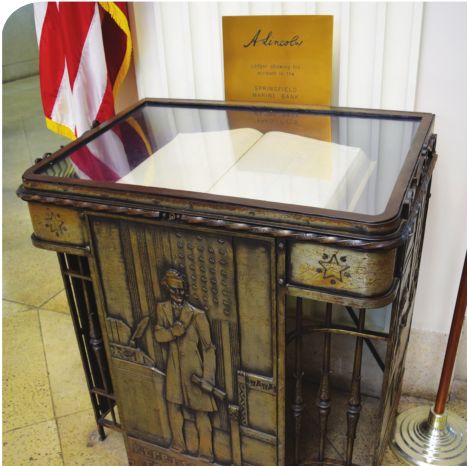
Lincoln Tomb, 1500 Monument Ave., Oak Ridge Cemetery, 217-785-7960, www.illinoishistory.gov.
The tomb is open daily from 9 a.m.-5 p.m. The cemetery is open 7 a.m.-8
p.m. daily from April 1 to Aug. 1, and 7 a.m.-5:30 p.m. daily from
Sept. 1 to March 31.
Lincoln’s New Salem State Historic Site A
visit to Lincoln’s New Salem State Historic Site will transport you to a
century long gone, while giving you a better understanding of life as a
pioneer. Though we often think of Lincoln as the hardworking,
rail-splitting pioneer, historians maintain he lived in the village from
1831 to 1837 to get away from the manual labor of his younger days.
While
many of the structures were rebuilt over the original sites in the
early 1930s, the town adheres to an impressive and painstaking attention
to 1830s authentic detail. Interpreters in period dress effectively
explain and demonstrate life in the 1800s.
Lincoln’s New Salem has a visitor center where guests can view the film Turning Point -
an introduction to Abraham Lincoln’s New Salem experience. The visitor
center also contains a museum exhibit, highlighting artifacts used by
original
New Salem residents. A souvenir shop and restaurant are also available
on site. Theatre in the Park presents musicals and plays in the outdoor
theater during the summer. The site hosts a variety of special events
throughout the year, such as the Candlelight Walk and Pioneer Life
Summer Day Camp. A complete list of activities and events can be found
at www.lincolnsnewsalem. com. Maintained by the Illinois Historic
Preservation Agency, New Salem is also home to a well-equipped
campground. You can easily spend at least a day here, if not a weekend,
depending on when you’re visiting.
New Salem is about 20 miles northwest of Springfield on Route 97, 15588 History Lane, Petersburg. 217- 632-4000, www.lincolnsnewsalem.com.
Hours are 9 a.m. to 5 p.m. Open 7 days per week April through October.
Closed on Mondays and Tuesdays, November through March. Free admission.
Suggested donations: $2 children ages 12 and under, $4 adults or $10 for
a family.
The Lincolns’ church For
12 years, Abraham and Mary Todd Lincoln paid a fee to rent pew 20 at
the First Presbyterian Church when they attended services at the
church’s former location at Washington and Third streets. Despite the
pew rental, Abraham Lincoln never joined this – or any – church. Since
then, the church has moved to South Seventh Street, which also served as
the location for funeral services for Mary Todd Lincoln.
Between
1890 and 1922, seven memorial windows by the world-famous glassmaker
and artist Louis Comfort Tiffany were installed. Until air conditioning
proliferated beyond movie houses and taverns, their bottom portions
swung open to permit better air circulation during sweltering summer
Sunday services. Sealed and protected against the elements since the
mid-1960s, they are a historical testament to a unique art form –
symphonies of sunlight for Springfield citizens and tourists.
First Presbyterian Church, 321 S. Seventh. For information about tours call 217-528-4311 ext. 204, email information@lincolnschurch. org, or visit www.lincolnschurch.org.
Lincoln ledger While
Lincoln is often referred to as The Great Emancipator, a glimpse at
Lincoln’s banking ledger shows that his life was not much different than
that of the average citizen. The exhibit features bank statements for
expenditures for everyday necessities, such as groceries and monthly
mortgage payments. What did he buy? Visit and see for yourself!
The
Lincoln ledger is in the lobby of Chase Bank, 1 East Old State Capitol
Plaza, at the southeast corner of Sixth and Washington streets.
217-527-3860. Open 9 a.m.-5:30 p.m. Monday through Friday. Free
admission.
Lincoln Depot When
Lincoln left Springfield by train from the Great Western Depot on the
morning of Feb. 11, 1861, he was headed for Washington, D.C., to assume
the presidency.
“To
this place and the kindness of these people, I owe everything,” Lincoln
said, addressing the crowd which gathered to bid him farewell. His
assassination in 1865 ensured he would never return alive, making that
train station the last place he ever set foot in Springfield.
Now
called the Lincoln Depot, the station still stands at the intersection
of the 10 th Street rail corridor and Monroe Street. Although the depot
has been remodeled several times – once due to a suspicious fire in 1968
– its appearance remains largely true to how it appeared the day of
Lincoln’s departure from Springfield. The first floor is open to
visitors for self-guided tours, while the second floor, added around
1900, serves as a private law office, befitting Lincoln’s profession. As
fate would have it, Springfield attorney Jon Noll, husband of depot
owner Pinky Noll, is a descendant of Lincoln’s law partner, William
Herndon. The depot was added to the National Register of Historic Places
in 2014.
Lincoln Depot, 930 East Monroe St., 217-544-8695, www.lincolndepot.org. Open 10 a.m.-4 p.m. Monday-Friday. Call for availability on Saturdays and holidays. Free admission.


